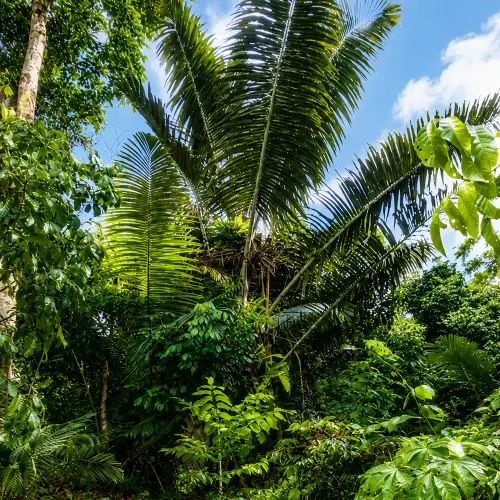


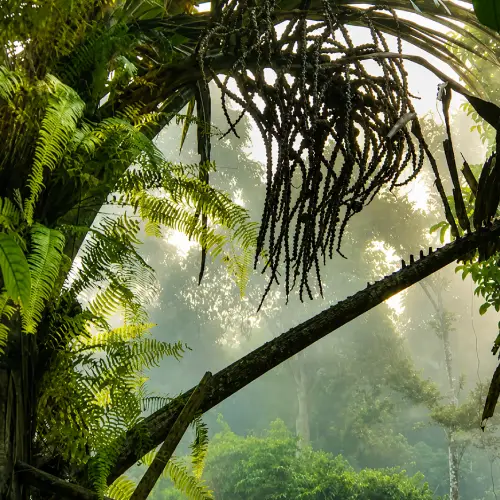
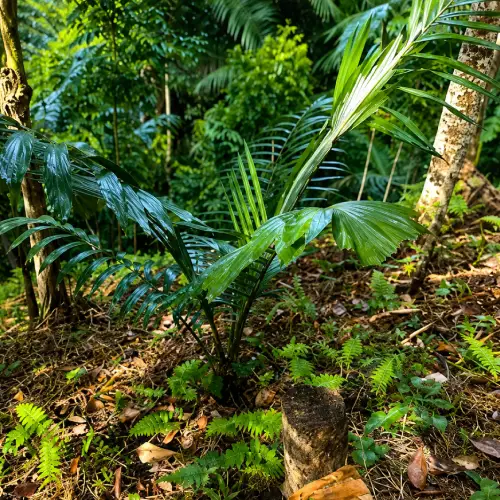
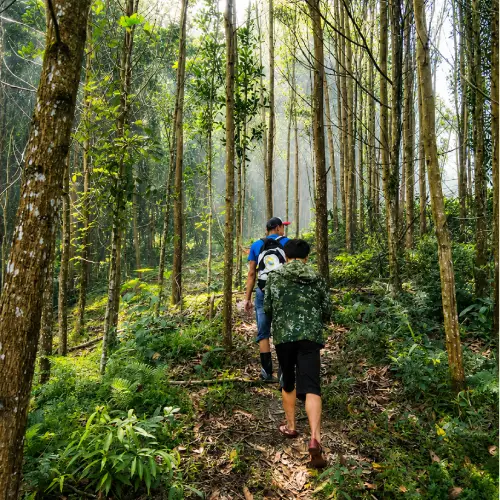
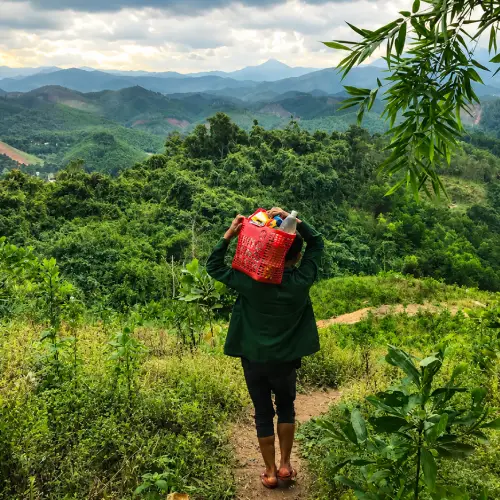
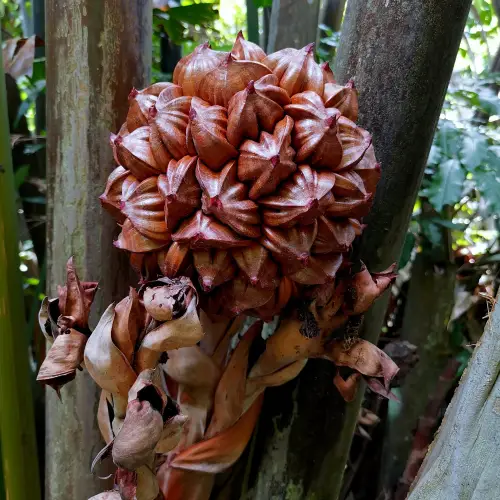
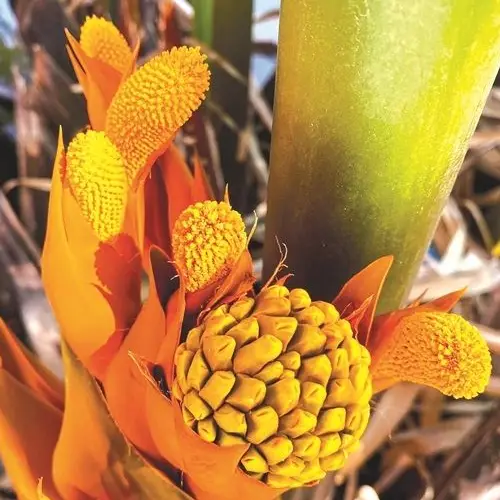
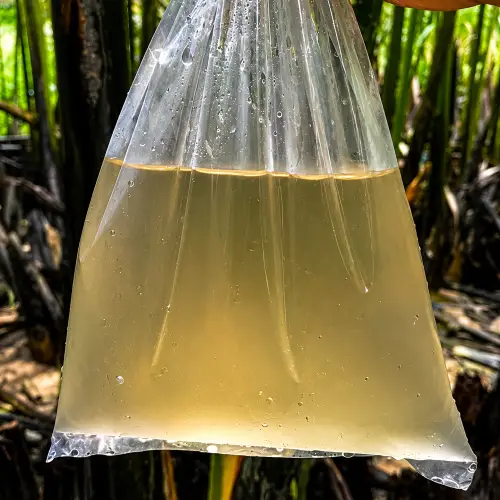
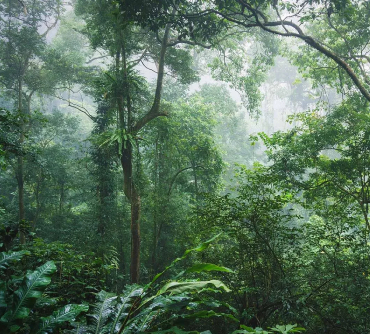


Arenga palms grow naturally along the Truong Son Mountain Range, stretching across Central Vietnam. In Quang Nam, they are found mainly in the western districts of Nam Giang, Dong Giang and Tay Giang, where they have long been part of the lives of the Co Tu and Xo Dang communities. Unlike cultivated crops, these palms grow deep in the forest, making every harvest a journey into rugged mountain landscapes.
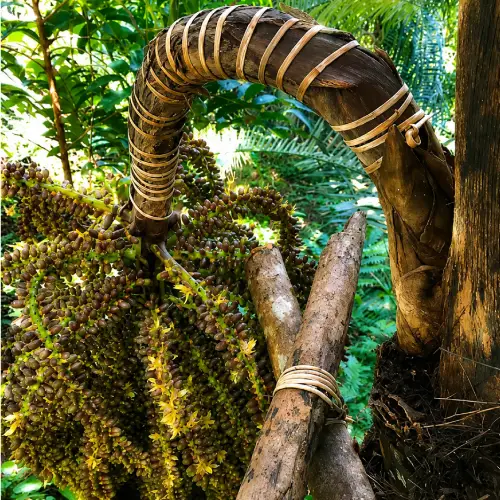
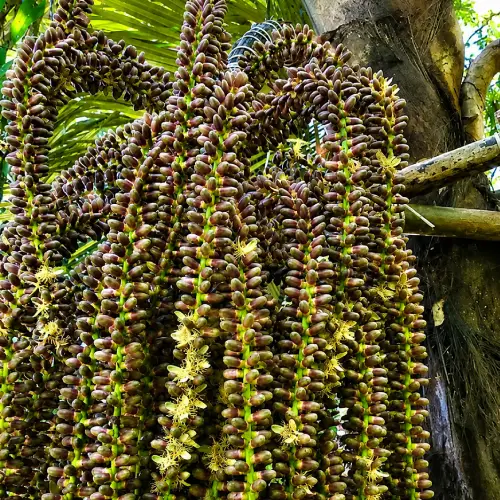
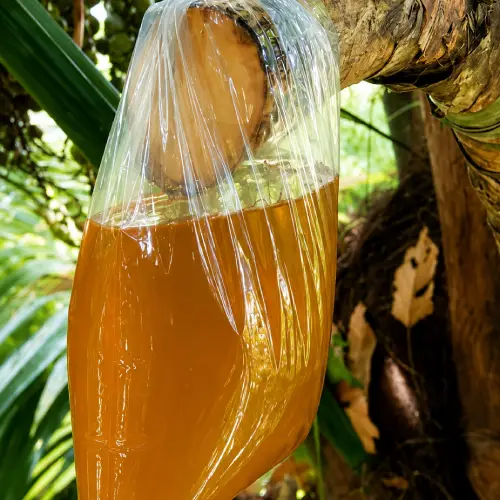
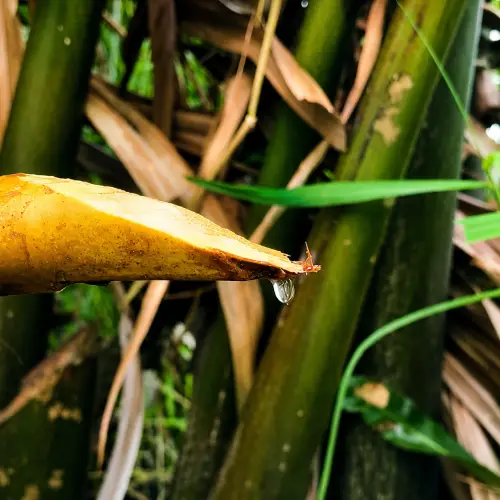
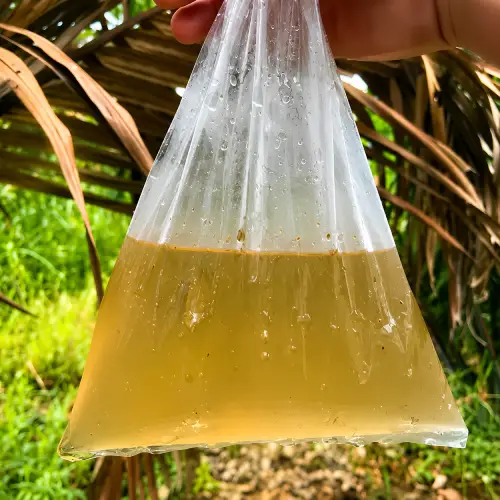
An arenga palm begins producing nectar at around twelve years of age. Before harvesting can begin, each flower is carefully prepared for 30 to 45 days through a traditional process of gently striking the flower stalk twice a day with a heavy wooden mallet weighing up to five kilograms. The flowers grow high above the ground, requiring harvesters to build wooden ladders and climb into the canopy to work safely. Once ready, a single flower can yield between five and ten litres of fresh nectar per day for up to 60 days. Because the nectar begins to ferment naturally within just a few hours, Hoa Arika harvests it every two hours to preserve its delicate flavor, natural freshness and remarkably low glycemic index.
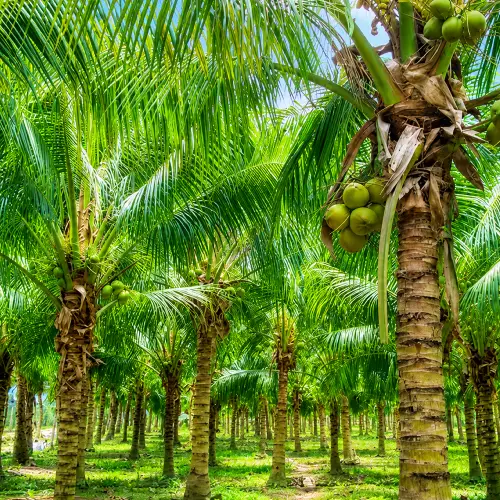
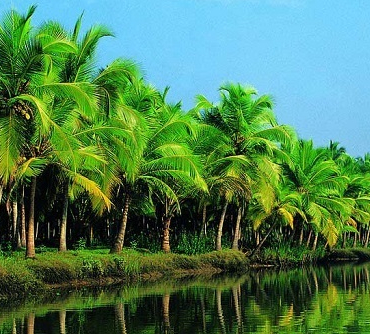
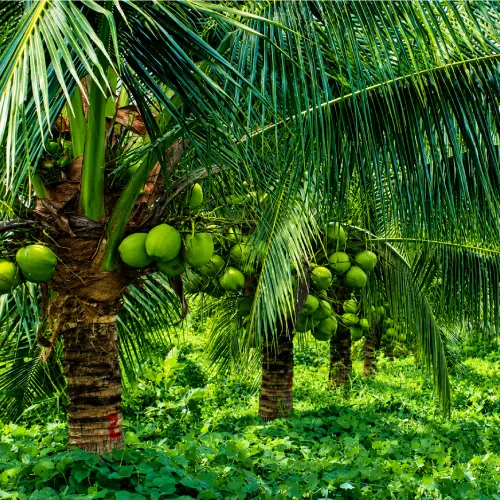
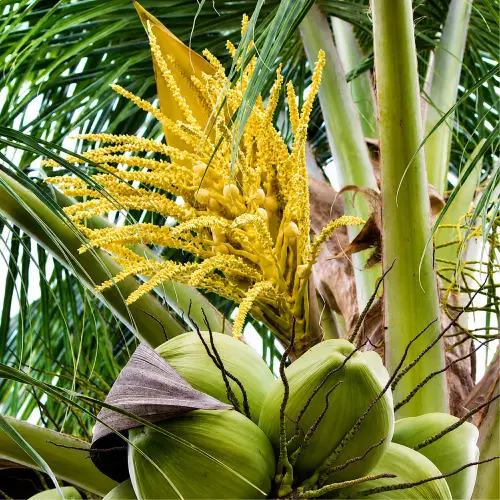
Coconut palms have long been part of the rural landscape of Quảng Nam, where generations of farmers have cultivated them alongside rice fields and village life. The coconut blossom nectar used by Hoa Arika comes from carefully managed groves in Dai Loc and Nui Thanh. After around four years, the palms begin to flower, and about a year later, the blossoms are ready to produce fresh nectar.
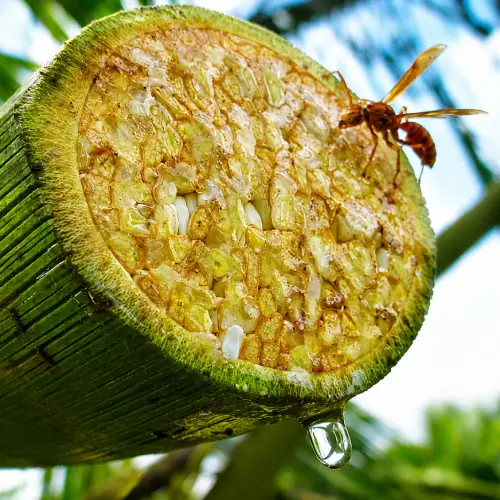
Harvesting coconut blossom nectar is a craft that requires patience and precision. Before a single drop of nectar can be collected, each flower is gently massaged by hand every day for around 20 days. Once ready, a single blossom can produce up to one litre of fresh nectar per day for about 30 days. Because the nectar begins to ferment naturally within just four hours, we harvest it every two hours to preserve its clean taste, delicate aroma and natural freshness.
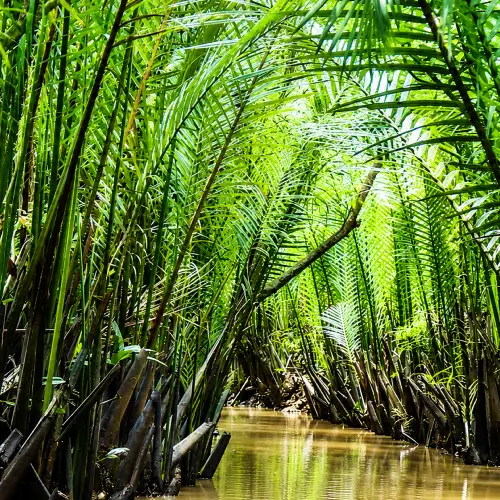
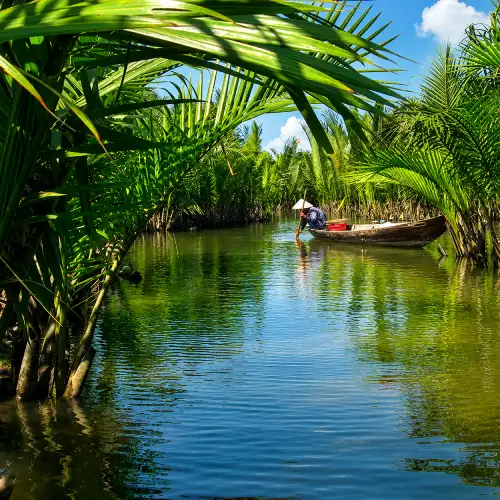
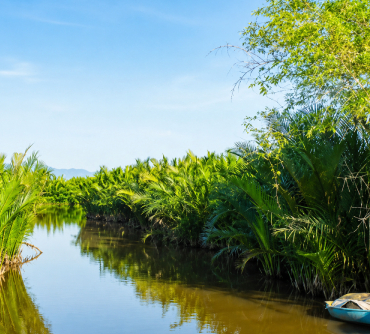
Unlike cultivated coconut palms, nipa palms grow naturally along rivers, estuaries and mangrove forests. Their flowering and fruiting cycles are less predictable, making fresh nectar far more challenging to harvest. To ensure a reliable supply, Hoa Arika partners with experienced farmers across Cam Thanh, Tam Nghia, Quang Ngai and the Mekong Delta, where generations of local knowledge help preserve this remarkable tradition.
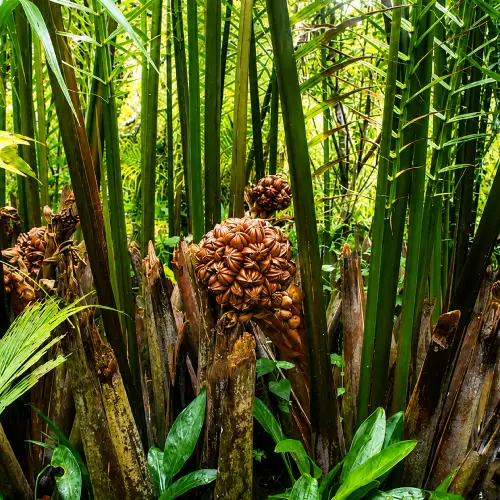
A nipa palm can begin producing nectar at around eight years of age. Harvesters may collect nectar from either the flower stalk or the fruit stalk, both of which require around 45 days of careful preparation. Every morning and evening, the stalk is gently massaged and tapped by hand before it is ready to yield nectar. Once flowing, each stalk can produce around one litre of fresh nectar per day for up to 35 days. Naturally rich in plant-derived nutrients and known for its remarkably low glycemic index (GI 17), fresh nipa palm nectar is one of nature's most extraordinary sweeteners.
People often say that palm nectar tapping is an art, and those who harvest it are artists. Preparing a flower to produce nectar is a skill that cannot simply be learned from books or measured by science. It is built through years of observation, experience, patience and a deep understanding of the tree itself. Two people may work on the same flower, yet only one succeeds in encouraging it to release its nectar.
The work also demands remarkable discipline. Depending on the palm species, each flower must be gently massaged or tapped by hand twice a day for 20, 30 or even 45 consecutive days before the first drop appears. Once the nectar begins to flow, the work becomes even more demanding. Because fresh palm nectar starts to ferment naturally within just a few hours, we harvest it every two hours to preserve its delicate flavor and freshness. Every step is carried out entirely by hand, from preparing the flower to collecting each drop.
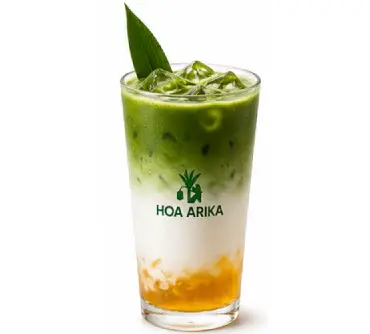
Behind every glass at Hoa Arika is a journey shaped by patience, craftsmanship and care. It is the work of dedicated farmers and indigenous communities, from the mangrove waterways and fertile plains to the forests of the Truong Son Mountains, whose knowledge has been passed down through generations.
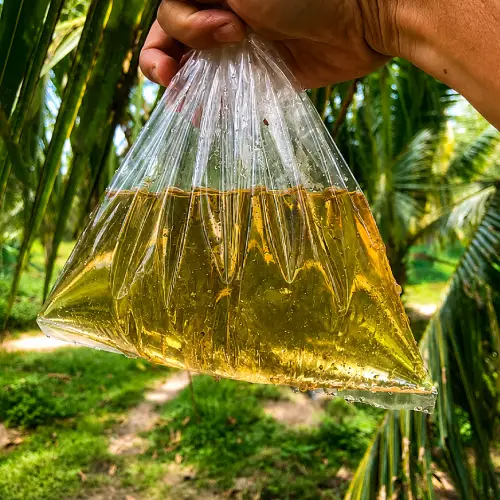
Fresh palm nectar is one of nature's most delicate ingredients. Unlike refined sugar or commercial syrups, it begins to ferment naturally within just a few hours of being harvested. That's why the fresh nectar used in Hoa Arika drinks is collected in the early morning or on the previous evening, then transported to our kitchen every day. Depending on the recipe, it is either gently pasteurized to preserve its natural character or slowly cooked into a rich syrup with delicate caramel notes.
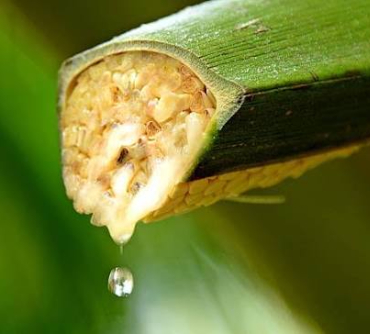
Timing is everything. If nectar is not collected promptly, it quickly begins to ferment. If a flower is left untapped, the cut surface naturally seals itself and the nectar stops flowing. This daily rhythm of harvesting, transporting and preparing fresh nectar is what makes every Hoa Arika drink possible.
For us, freshness is more than a promise. It is a commitment shared by farmers, harvesters and our team every single day, so that every guest can experience palm nectar at its very best.
The freshness of palm nectar shapes everything - from its flavor and aroma to the way we craft every drink at Hoa Arika.
Every drink begins with fresh palm nectar harvested just hours earlier, bringing you the pure taste of forests, rivers and palm groves across Central Vietnam.
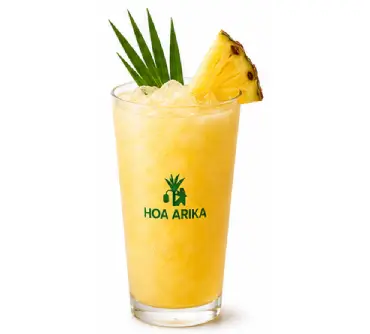
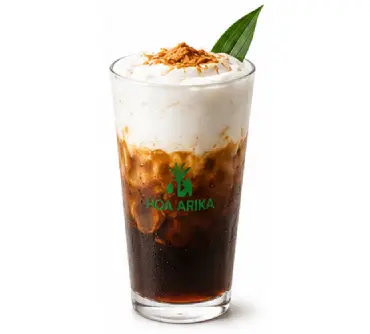
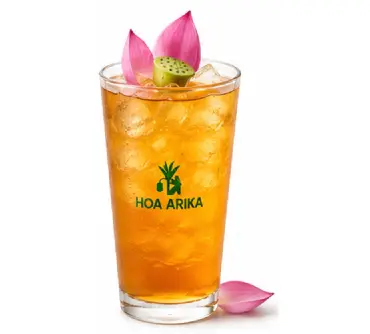
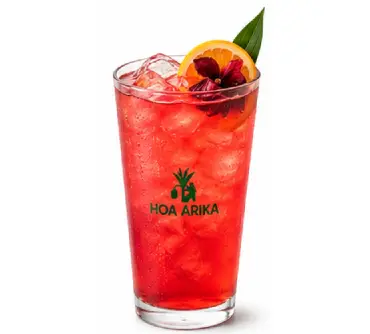
Every Hoa Arika drink is naturally sweetened with fresh palm nectar. We never add refined sugar or artificial sweeteners.
Our three fresh palm nectars naturally have a low glycemic index: Nipa (GI 17), Coconut (GI 35) and Arenga (GI 35–40).
Fresh palm nectar naturally contains minerals, electrolytes, amino acids and plant-derived nutrients preserved from the palm flower itself.