
We’re adding more local information, photos, and details about nipa palm nectar harvesting. This is not the final version yet, but we hope it helps you discover another interesting story from Hoi An.
If you’ve visited Cam Thanh Coconut Village, you’ve probably seen the green nipa palms along the waterways. Many tourists come here to enjoy a basket boat ride through the coconut forest.
But there is something else interesting about these palms. Besides their leaves and fruits, nipa palms can also produce a naturally sweet liquid collected from their flower stalks.
It’s called nipa palm nectar, or mật dừa nước in Vietnamese. Let’s learn a little more about it.
1. What Is a Nipa Palm?
The nipa palm (Nypa fruticans) is a type of palm that grows in tropical coastal areas, especially along rivers and waterways with brackish water.
Unlike a normal coconut tree, it doesn’t have a tall trunk above the ground. Its long leaves grow directly from the base, forming thick green areas along the water.
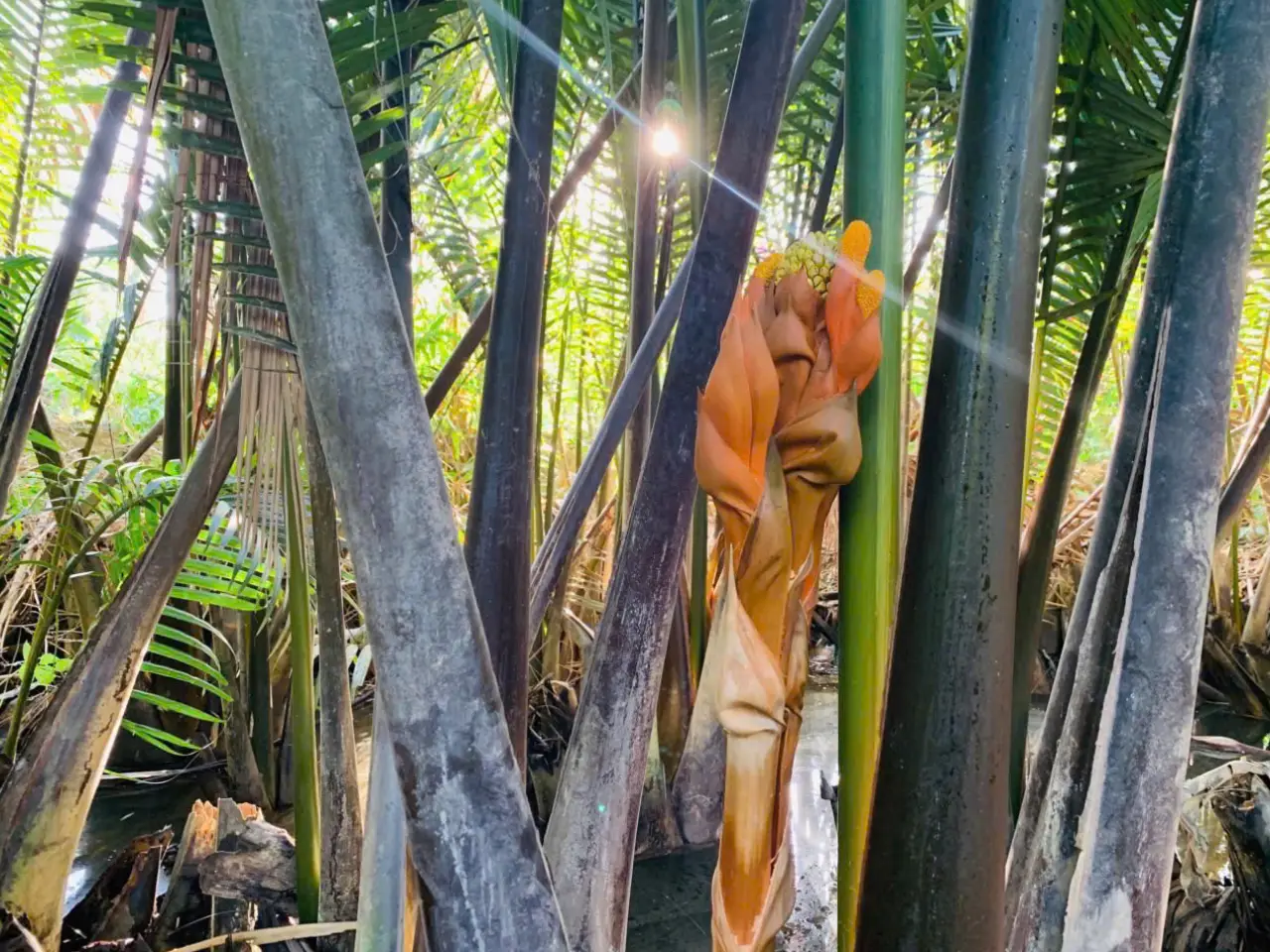
In Hoi An, nipa palms are well known in the Bay Mau Coconut Forest in Cam Thanh. They are part of the local landscape and have been useful to people living near the rivers for generations.
2. How Do Local People Use Nipa Palms?
Nipa palms are not just plants for tourist photos. Different parts of the palm have practical uses.
- Leaves: Traditionally used for roofing and making simple household items.
- Leaflets: Used for small handicrafts and decorations.
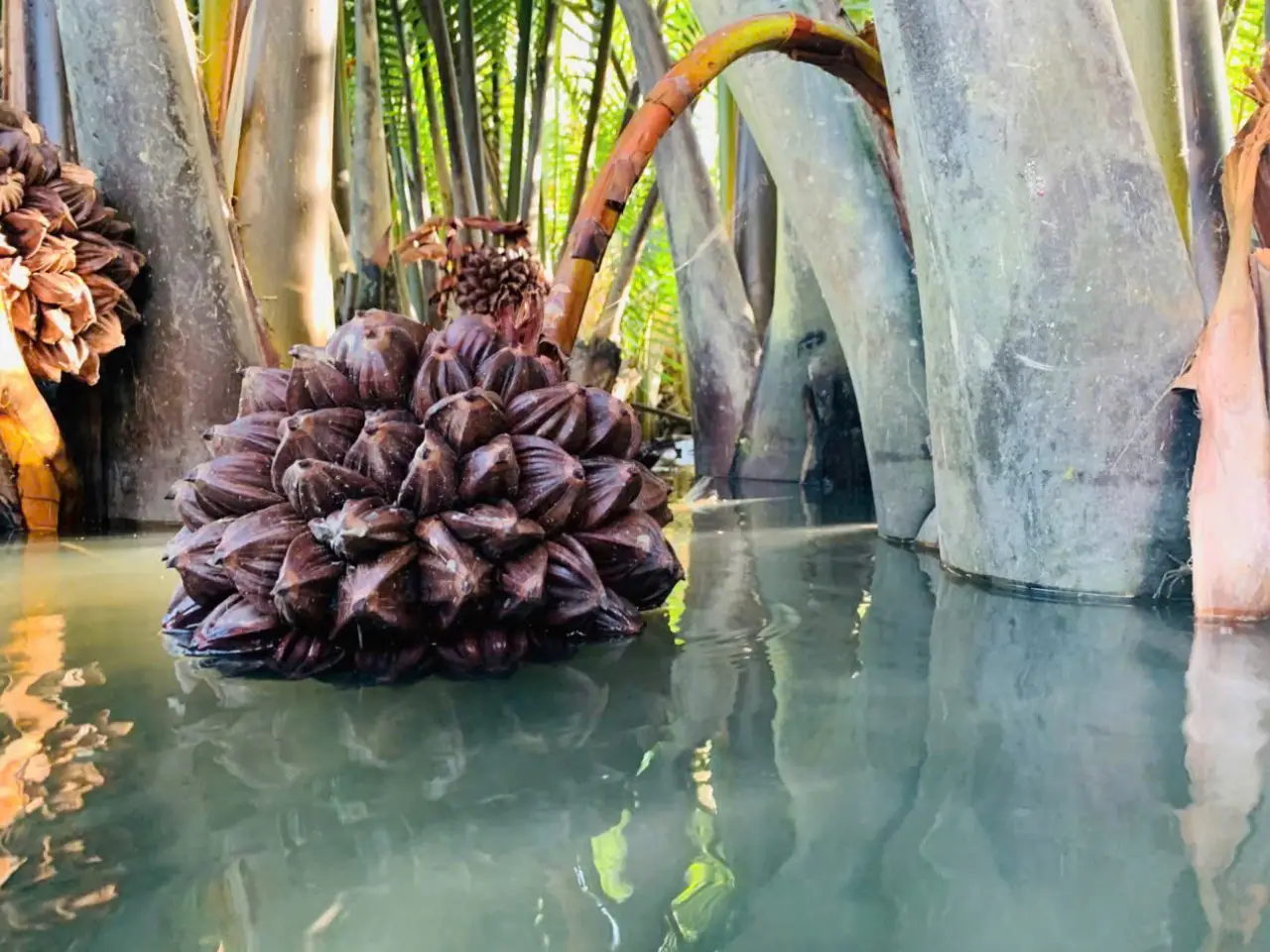
- Young fruits: The soft, jelly-like seeds can be eaten in some local foods and desserts.
- Flower stalks: Under suitable conditions, they can be tapped to collect sweet nectar.
Today, many visitors know nipa palms because of the basket boat tours. The nectar is a less familiar part of their story.
3. What Is Nipa Palm Nectar?
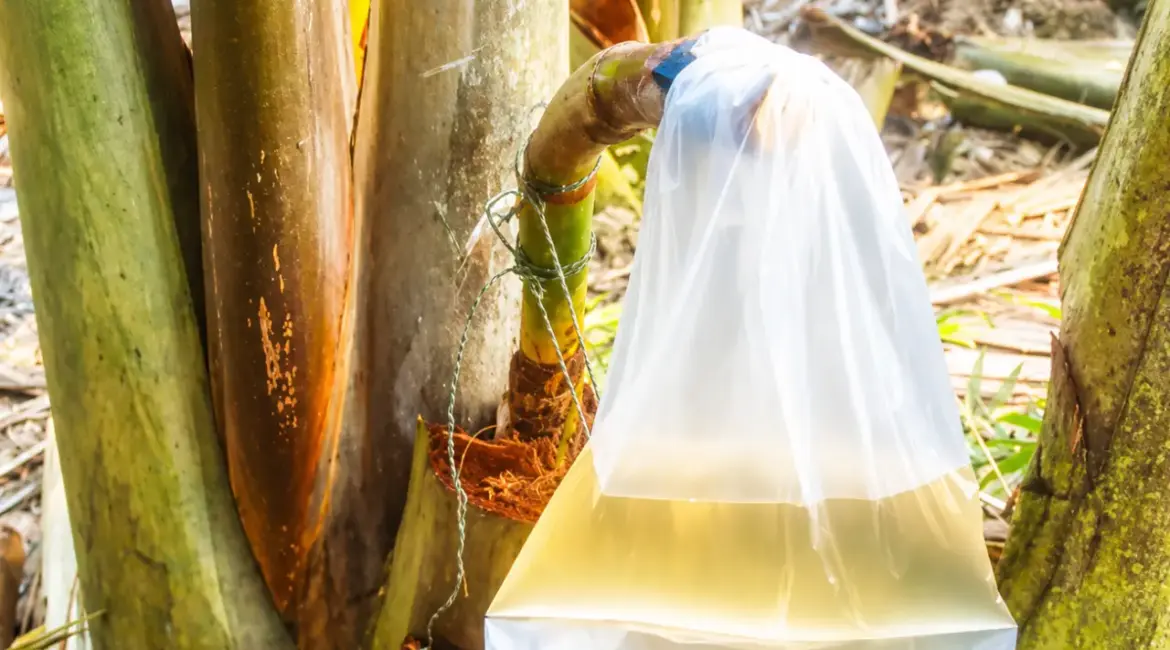
Nipa palm nectar is a sweet sap collected from the palm’s flower or fruit stalk. It is not the water inside a coconut or nipa fruit.
The fresh sap contains natural sugars and has a mild sweetness. Its taste can vary depending on the palm, growing conditions, and how the nectar is collected and handled.
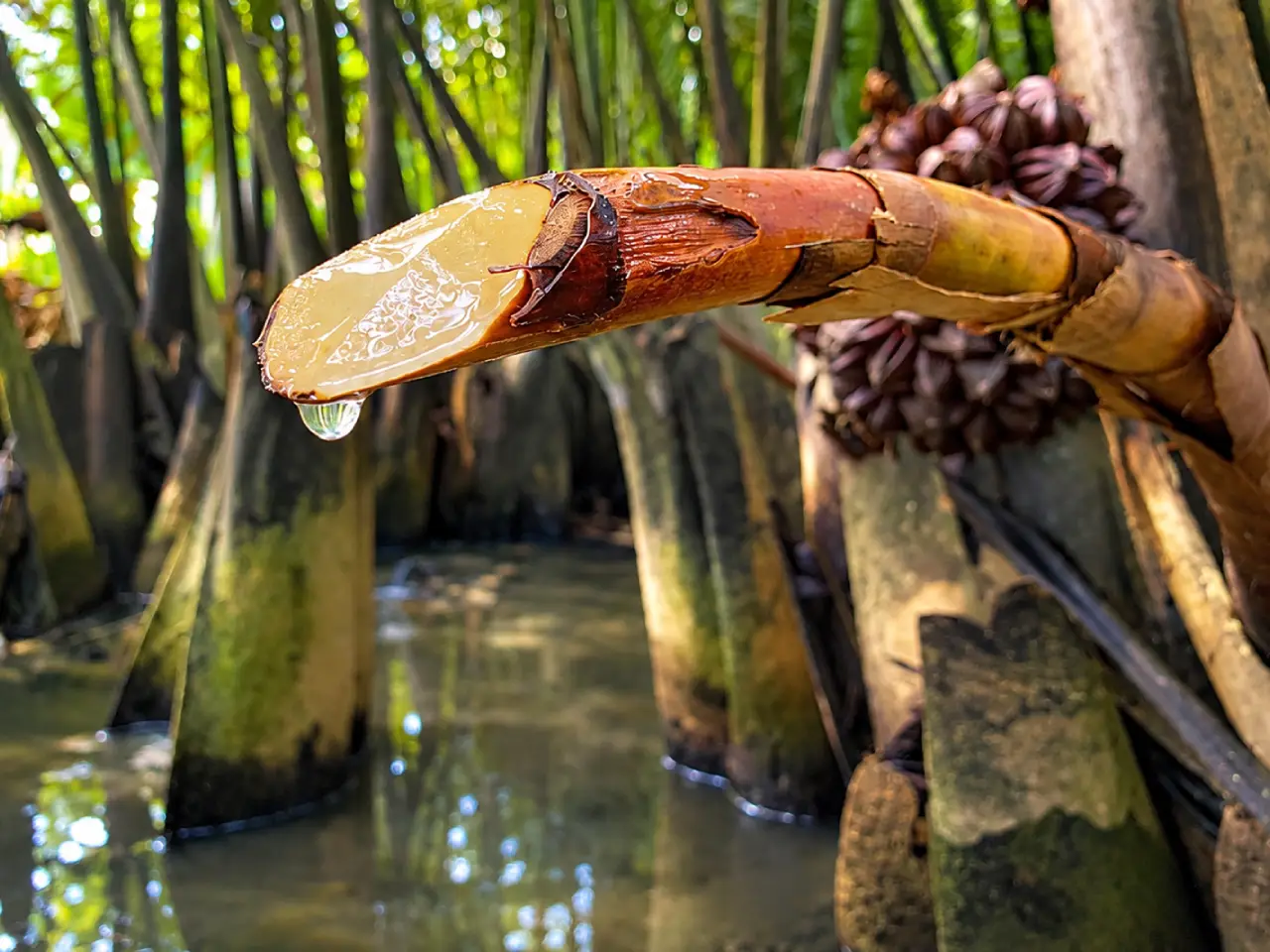
Good to know: Nipa palm nectar and coconut water are two different things. Nectar is collected from a stalk, while coconut water is found inside the fruit.
4. How Is Nipa Palm Nectar Collected?
Collecting nectar takes time, care, and experience. It is not as simple as cutting a flower and waiting for the liquid to come out.
Preparing the Stalk
Farmers first select a suitable flower or fruit stalk. They prepare and condition it over time using techniques learned through experience. The process helps the stalk release sap when it is tapped.
Collecting the Fresh Nectar
Once the stalk is ready, the farmer makes a careful cut and places a clean container to collect the dripping sap. The cut and collection process needs regular attention.
Depending on the palm and local method, collection may continue over a period of time. Not every stalk will produce the same amount of nectar.
Handling It Quickly
Fresh palm nectar is delicate. Natural microorganisms can begin changing the sap soon after collection, especially in warm weather.
For this reason, clean equipment, quick handling, and suitable storage are important if the nectar is intended for drinks or food.
5. Does Every Nipa Palm Produce Nectar?
Nipa palms have the natural ability to produce sweet sap, but this doesn’t mean every palm is being tapped.
Farmers need suitable palms, the right stage of growth, practical access to the plants, and the knowledge to prepare the stalks. Harvesting also requires regular work.
So, seeing a nipa palm forest does not mean nectar is being collected there. The famous tourist waterways of Cam Thanh and the places where nectar is actually harvested may be different.
6. What Does Fresh Nipa Palm Nectar Taste Like?
Fresh nipa palm nectar is naturally sweet, with a gentle flavour that is different from refined white sugar.
Its taste and sweetness can change from one harvest to another. Freshness and handling also make a difference.
Some people enjoy fresh palm sap as a drink where it is safely collected and prepared. It can also be used as an ingredient in food and drinks, or processed into other products.
Because fresh sap can ferment quickly, it should be handled carefully. Don’t assume that sap collected directly from a palm is automatically safe to drink without proper food handling.
7. Is Nipa Palm Nectar the Same as Palm Sugar?
Not exactly.
Fresh nectar is the liquid collected from the palm stalk. Palm syrup is made by reducing some of the water from the sap. Palm sugar is a more concentrated product.
These products can taste different and have different levels of sweetness. It’s useful to check which form is being used when you see “palm nectar” or “palm sugar” on a menu.
8. Can You See Nipa Nectar Harvesting in Hoi An?
Basket boat tours in Cam Thanh mainly focus on the coconut forest, local boating, and visitor activities. Nectar tapping is a separate type of work and is not a standard part of a basket boat ride.
If you’re interested in seeing how nectar is collected, ask whether a genuine harvesting visit is available. Don’t expect to find a tapping demonstration at every tourist boat station.
It’s also important to respect working farmers and ask permission before entering a harvesting area or taking close-up photos.
9. Why Is This Story Interesting for Visitors?
Many visitors see the nipa palms as a beautiful green background during a basket boat ride. But these plants are also connected to traditional skills, local food, and life along the rivers.
Learning about the nectar gives you another way to understand the coconut forest. A familiar plant can have a story that is easy to miss during a short tour.
10. From Nipa Palm Nectar to a Drink at Hoa Arika
At Hoa Arika Hoi An, we use fresh nipa blossom nectar as one of three natural sweeteners in our drinks. The other two are coconut blossom nectar and arenga blossom nectar.
These three nectars come from different palms and landscapes around Hoi An and the wider central Vietnam region. We use them in place of refined sugar in our drink recipes.
For us, each nectar is more than a sweet ingredient. It also gives us a chance to share the story of the farmers, the plants, and the places they come from.

If you’re curious, you can learn more at Hoa Arika Hoi An, a small takeaway drink shop at 2A Phan Chau Trinh, near Banh Mi Phuong.
Explore More of Cam Thanh
Planning a visit to the coconut forest? You may also enjoy our guides to Cam Thanh Coconut Village, whether a basket boat ride is worth it, and basket boat tips for first-time visitors.
Explore Hoi An with Hoa Arika – A sweet story from Hoi An.