




Hoi An is famous for its Ancient Town, lanterns, An Bang Beach and the coconut forest in Cam Thanh. These places are worth visiting, but they can also become busy, especially during weekends and holiday seasons.
Beyond the popular attractions, there are many quieter places in and around Hoi An. Some are only a few kilometres from the Ancient Town, while others are suitable for a full-day road trip.
A few places in this guide are not really tourist attractions at all. They are rarely mentioned on popular travel websites and may have no signs, ticket booths or tourism services. In many cases, they are better known by local people, or by travellers who enjoy exploring beyond the usual routes.
These places may not have professional tourism services, large restaurants or organised activities. Their attraction comes from peaceful scenery, local life and a feeling that the landscape has not been changed too much for tourism.
The distances below are approximate and calculated from Hoi An Ancient Town. Actual travel distance may vary depending on your starting point and the route suggested by Google Maps.
Some of the best hidden gems around Hoi An are not famous tourist attractions at all.
They include Dam Cam Ha, a quiet wetland near Tra Que; a little-known beach in Dien Duong; Suoi Tien in Que Son; Cam Dong farming village; Phuoc Ha Dam; and Loc Yen Ancient Village.
6 Hidden Gems Around Hoi An at a Glance
Dam Cam Ha
Quiet wetland, rice fields, buffaloes and peaceful countryside.
Dien Duong Hidden Beach
A quiet, little-known stretch of undeveloped coastline.
Cam Dong Village
Bamboo bridge, vegetable farms and genuine rural village life.
Phuoc Ha Dam
Open countryside, terraced fields and a peaceful rural landscape.
Suoi Tien, Que Son
Clear mountain water, natural pools and multi-level waterfalls.
Loc Yen Ancient Village
Old wooden houses, stone lanes, gardens and traditional village life.
1. Dam Cam Ha: A Quiet Wetland Beside the Rice Fields
Distance from Hoi An Ancient Town: approximately 4 kilometres
Best for: cycling, sunrise, countryside photography and quiet moments
Google Maps: Dam Cam Ha
Dam Cam Ha is a peaceful wetland near Casamia Calm, not far from Tra Que Vegetable Village.
Although it is only a short bicycle or motorbike ride from central Hoi An, very few tourists know about this place. It is not really a tourist attraction, but simply a quiet part of the local countryside. In a town where many popular attractions can become crowded, Dam Cam Ha offers something different: open space, calm scenery and a peaceful feeling away from the tourist crowds.
The water lies beside wide rice fields. During the growing season, the fresh green paddies create a beautiful open landscape around the wetland.
One of the most attractive features is the group of slender casuarina trees leaning towards the water. Their unusual shapes, together with the reflections on the surface, make this a lovely place for simple countryside photography.
The small roads around Dam Cam Ha receive very little traffic. Depending on the time of day, you may see farmers working in the fields, buffaloes cooling themselves in the water and white egrets flying above the rice paddies.
Early morning and late afternoon are the best times to visit. The morning is cool and peaceful, but it requires an early start. For most travellers, late afternoon is an easier choice. The weather is more comfortable, the light is softer, and the rice fields and water look especially beautiful before sunset.
Dam Cam Ha is not a place where you need to spend several hours. It is better enjoyed as a quiet stop during a bicycle ride through Tra Que, Cam Ha and the countryside north of Hoi An.
Please stay on the public paths, avoid entering private farmland and keep a respectful distance from buffaloes and other animals.
2. Hidden Beach in Dien Duong
Distance from Hoi An Ancient Town: approximately 7 kilometres
Best for: a quiet swim, simple local food and an uncrowded seaside afternoon
Google Maps: Hidden Beach, Dien Duong
Dien Duong Hidden Beach is our own name for this quiet stretch of coastline in Dien Duong, between An Bang Beach and Ha My Beach. It is not an official beach name or a recognised local swimming area. The beach is reached through a small residential lane behind local houses, which is probably one reason why so few visitors know about it.
There are no large beach clubs, organised facilities or busy rows of restaurants here. The coast feels open, simple and largely undeveloped. For us, it has something of the atmosphere that Cua Dai Beach had around 30 years ago – before tourism development changed much of the coastline around Hoi An.
Most of the small businesses here are operated by local families. You may find simple places selling cold drinks, coconuts, seafood and basic local dishes, but the area still feels like a local beach rather than a developed tourist destination.
On normal weekdays, there are usually few international visitors. Not many local residents come here to swim either, especially during the morning and midday.
This makes Dien Duong Hidden Beach a good choice for travellers who want to enjoy the sea without the busier atmosphere of An Bang Beach or Cua Dai Beach.
The beach is simple rather than luxurious. Facilities are limited, and the appearance of the shoreline can change with the season and coastal weather.
Bring drinking water, sun protection and some cash. Avoid swimming when the waves are strong, particularly during the rainy season. Ha My and the surrounding Dien Duong coastline lie roughly seven kilometres north of central Hoi An.
3. South of Hoi An: A Road Trip Few Visitors Take
Most international visitors travel north from Hoi An towards Da Nang, the Marble Mountains, Son Tra Peninsula and Hai Van Pass.
Far fewer people explore the countryside and coast south of Hoi An.
This direction leads to places such as:
- Tam Thanh Beach
- Phu Ninh Lake
- Phuoc Ha Dam
- Loc Yen Ancient Village
- Quiet roads through the hills and farming areas of southern Quang Nam
These places are spread across a large area. They should not all be rushed into a short half-day trip.
A possible full-day route is:
Hoi An → Tam Thanh Beach → Phu Ninh Lake
Another good route is:
Hoi An → Phuoc Ha Dam → Loc Yen Ancient Village
Tam Thanh Beach
Distance from Hoi An Ancient Town: approximately 45–47 kilometres
Google Maps: Tam Thanh Beach
Tam Thanh is a long beach south of Hoi An, beside a traditional fishing community.
The coast has more open space and fewer large tourism developments than the main beaches near Hoi An. Fishing boats, small seafood restaurants and local village life remain part of the experience.
Nearby, Tam Thanh Mural Village is known for paintings created on the walls of local houses. Many of the murals show fishermen, children, boats and scenes from daily coastal life.
Tam Thanh is approximately 45-47 km from Hoi An, depending on the route. It is about 10 km east of central Tam Ky.
Phu Ninh Lake
Distance from Hoi An Ancient Town: approximately 60 kilometres
Google Maps: Phu Ninh Lake
Phu Ninh is a large reservoir surrounded by low hills, forests, islands and peninsulas.
Its landscape is very different from the flat rice fields and coastal areas around Hoi An. The wide water surface and surrounding greenery create a peaceful natural setting.
Some parts of the lake have tourism services and outdoor activities. Other areas remain quiet, with simple roads and viewpoints looking across the water.
Because Phu Ninh is very large, check the exact entrance or viewpoint before leaving Hoi An. Searching only for the name of the lake may lead you to a different side of the reservoir.
Phu Ninh Lake lies about 10 kilometres from Tam Ky and approximately 60 kilometres south of Hoi An. Its water surface covers around 3,433 hectares and includes many small islands and peninsulas.
Phuoc Ha Dam
Distance from Hoi An Ancient Town: approximately 40 kilometres
Google Maps: Phuoc Ha Dam
Phuoc Ha Dam is not a major tourist attraction, but it is a peaceful place with wide open views, quiet countryside roads and a strong rural Vietnamese atmosphere.
Around the reservoir, you can see terraced fields, farms and everyday local life, with very little tourism development.
Its location also makes it a pleasant stop on the scenic route towards Loc Yen Ancient Village, and it is not far from Suoi Tien in Que Son.
For travellers who enjoy quiet roads and rural landscapes, the journey through this area is often more interesting than the dam itself.
The Scenic Road from Phuoc Ha Dam to Loc Yen
Approximate distance between the two places: around 35-40 kilometres
Google Maps route: Phuoc Ha Dam to Loc Yen Ancient Village
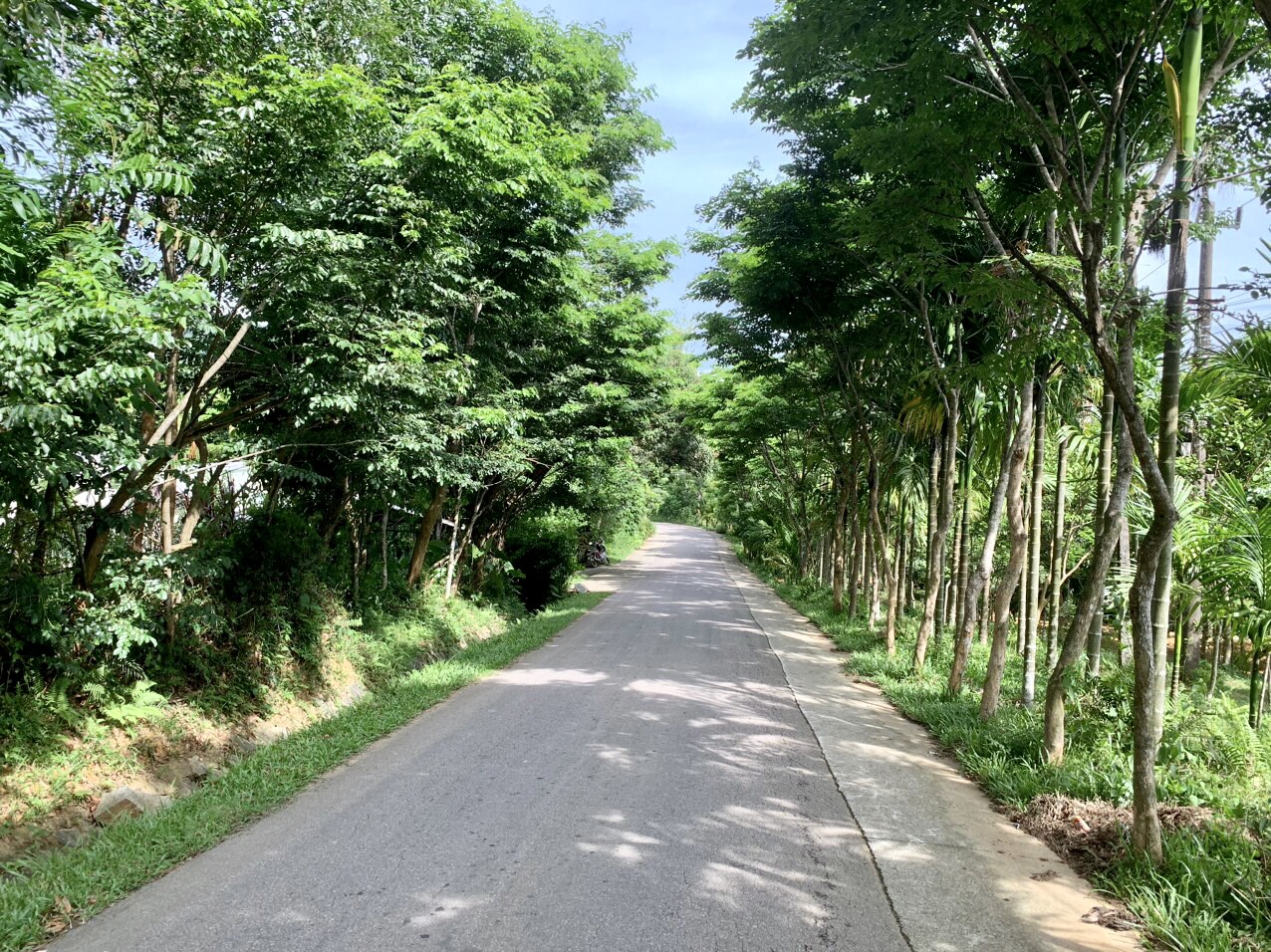
The journey from Phuoc Ha Dam towards Loc Yen is one of the most enjoyable parts of this southern route.
The road passes through low hills, forested areas, rice fields, small farms and quiet rural communities. Once you leave the main roads, traffic is usually light.
There may not be one famous viewpoint where every traveller stops. The beauty comes from the journey itself: winding roads, small bridges, village houses, gardens and changing countryside scenery. Along the way, you can also see local farmers working in the fields, people tending their gardens, buffaloes grazing and the quiet rhythm of everyday rural life. It is a simple but very genuine side of the Vietnamese countryside.
Save the route for offline use before leaving. Mobile reception may become less reliable in rural sections, and there are fewer fuel stations and shops than around Hoi An.
4. Loc Yen Ancient Village
Distance from Hoi An Ancient Town: approximately 75 kilometres
Travel time: around 1.5-2 hours each way
Best for: traditional architecture, history, countryside walks and photography
Google Maps: Loc Yen Ancient Village
Loc Yen is one of the most beautiful traditional villages in Central Vietnam.
Unlike Hoi An Ancient Town, Loc Yen is not built around busy commercial streets. Its old wooden houses are spread between low hills, rice fields, fruit gardens and narrow stone paths.
The village was established around the 15th and 16th centuries. Today, eight traditional houses more than 150 years old are under preservation, and some have remained within the same families for many generations.
Traditional houses in Loc Yen are usually built with wooden frames, pillars and carved structural details.
Many houses stand with their backs towards the hills and their fronts facing gardens or rice fields. This arrangement helps the buildings feel naturally connected to the surrounding landscape.
The old stone paths are another special feature of Loc Yen.
These narrow lanes run between tea hedges, gardens and family homes. The moss, uneven stones and surrounding vegetation give the village a quiet and aged appearance without making it feel like a museum.
Fruit gardens are also an important part of local life. Depending on the season, visitors may see jackfruit, bananas, mangosteen, langsat and other tropical fruits growing around the houses.
Loc Yen is still a living village. The old houses are family homes, not only attractions for visitors.
Ask for permission before entering a house, taking close photographs of residents or walking into private gardens. Buying fruit or local products directly from families is a simple way to support the community.
Because Loc Yen is around 75 kilometres from Hoi An, it is best treated as a full-day trip. The surrounding Tien Phuoc area lies roughly 74 kilometres south of Hoi An and is known for its hilly countryside and farming landscapes.
Combining Loc Yen with Phuoc Ha Dam and the scenic countryside road between them makes the journey more interesting than travelling only to one destination and returning immediately.
5. Suoi Tien: A Natural Stream with Many Waterfall Levels
Distance from Hoi An Ancient Town: approximately 42–45 kilometres
Best for: swimming, nature, light trekking and escaping the summer heat
Google Maps: Suoi Tien, Que Hiep, Que Son
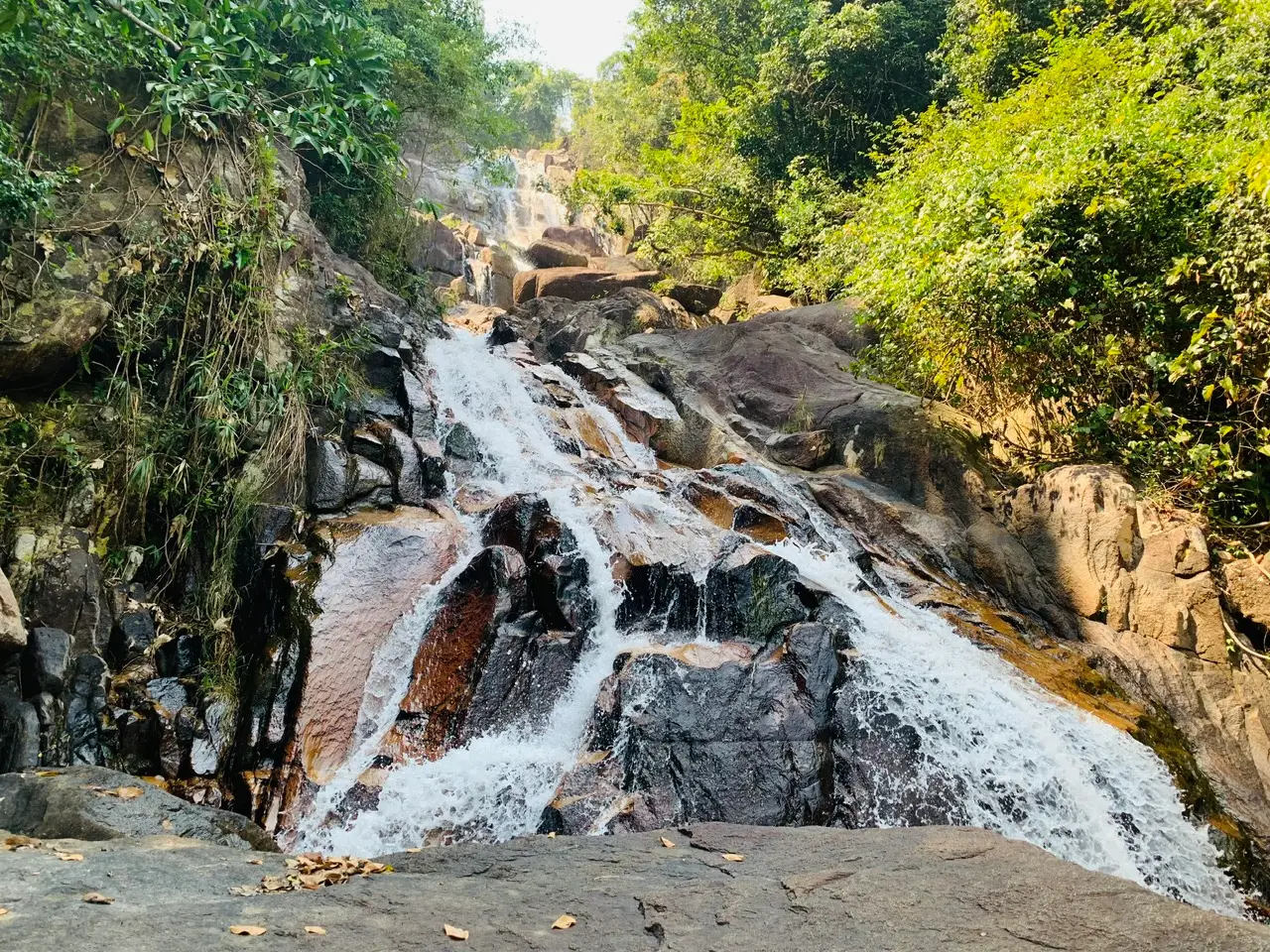
Suoi Tien is a beautiful mountain stream in Que Hiep, Que Son, southwest of Hoi An.
It is known by local people but is still rarely included in the normal travel plans of international visitors.
Suoi Tien is not a single waterfall. It is a long system of rocky streams, natural pools and connected waterfall levels running through a green mountain area. Local and tourism sources commonly describe the stream as having around 14 levels.
The lower sections are the easiest to reach and may attract local visitors during hot weekends and holidays.
The water is clear, cool and refreshing. Large rocks and thick green vegetation surround many of the natural pools.
Visitors who carefully continue towards the higher levels may find much quieter areas. The further you climb, the fewer people you are likely to meet.
Some upper pools are extremely peaceful, with little more than the sound of flowing water and forest insects. This quiet upper area is why we sometimes describe Suoi Tien as a secret waterfall near Hoi An.
However, reaching the higher levels does require some effort. The path can be uneven, steep and slippery in places, and there are no proper stairs or safety barriers. For travellers who enjoy trekking, though, the climb is not particularly difficult. You can generally follow the existing trail and use trees and rocks for support along the way. Compared with many normal trekking routes, the upper sections of Suoi Tien are relatively easy to explore in dry weather.
Wear shoes or strapped sandals with good grip. Bring enough water and protect your phone and valuables from getting wet.
Do not climb during heavy rain. Water levels can rise quickly in mountain streams, and wet rocks may become dangerous.
Avoid jumping into pools without checking their depth. Travellers who are not confident with trekking should remain in the easier lower areas.
6. Cam Dong Village and Its Bamboo Bridge
Distance from Hoi An Ancient Town: approximately 15–18 kilometres
Best for: countryside cycling, village life and photography
Google Maps: Cam Dong Bamboo Bridge
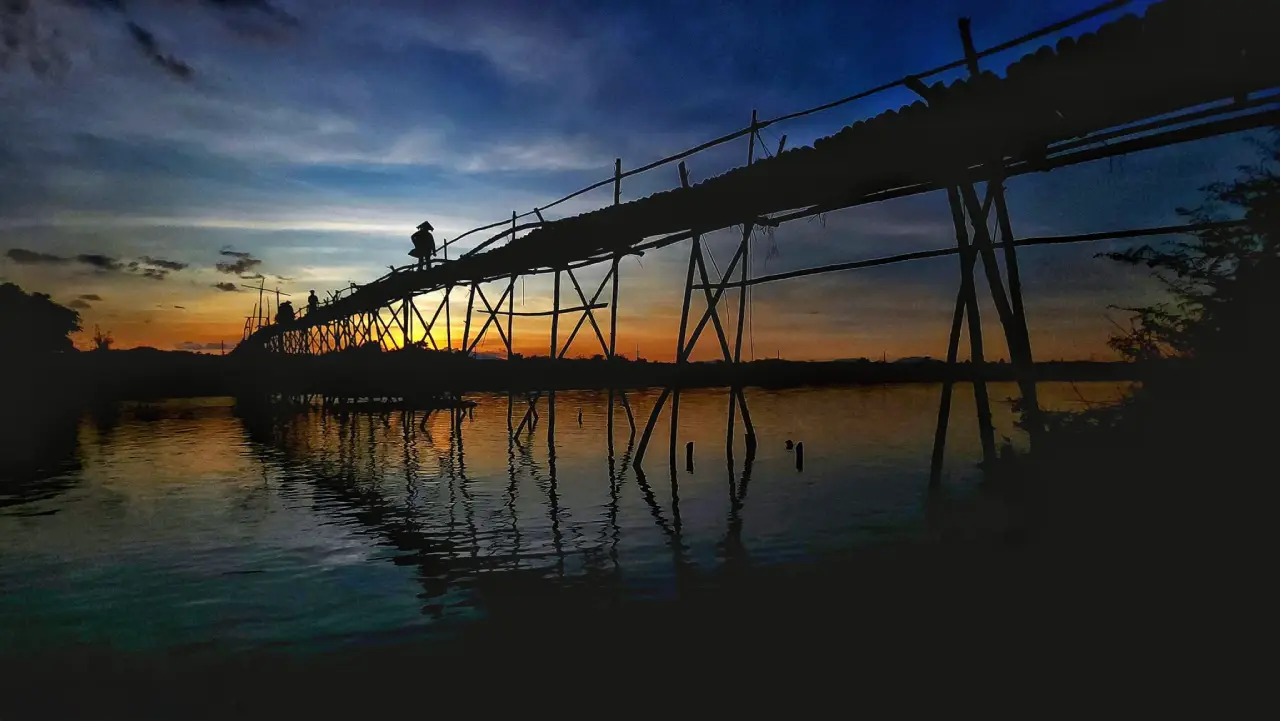
Photo courtesy of
Le Anh Ca
Cam Dong is a rural farming village outside the main tourism areas of Hoi An.
The village still has a strong Vietnamese countryside character, with vegetable fields, rivers, small local roads and families whose daily lives depend on agriculture.
Its best-known feature is a long bamboo bridge crossing the river.
The bridge was not built as a tourist decoration. Local villagers use it to reach the fertile alluvial land on the opposite side, where they grow vegetables and other crops.
In the early morning or late afternoon, you may see farmers walking or cycling across the bridge with tools, baskets and harvested vegetables.
The Cam Dong bamboo bridge is around 120 metres long and connects the village with farming land across the river. Its narrow structure is built and maintained by local residents.
The condition of the bridge may change after storms and seasonal floods. Bamboo sections sometimes need to be repaired or rebuilt.
Walk slowly, allow farmers to pass first and avoid gathering in the middle of the bridge for a long photo session.
The surrounding village is just as interesting as the bridge. Take time to explore the quiet roads, vegetable-growing areas and everyday rural scenery.
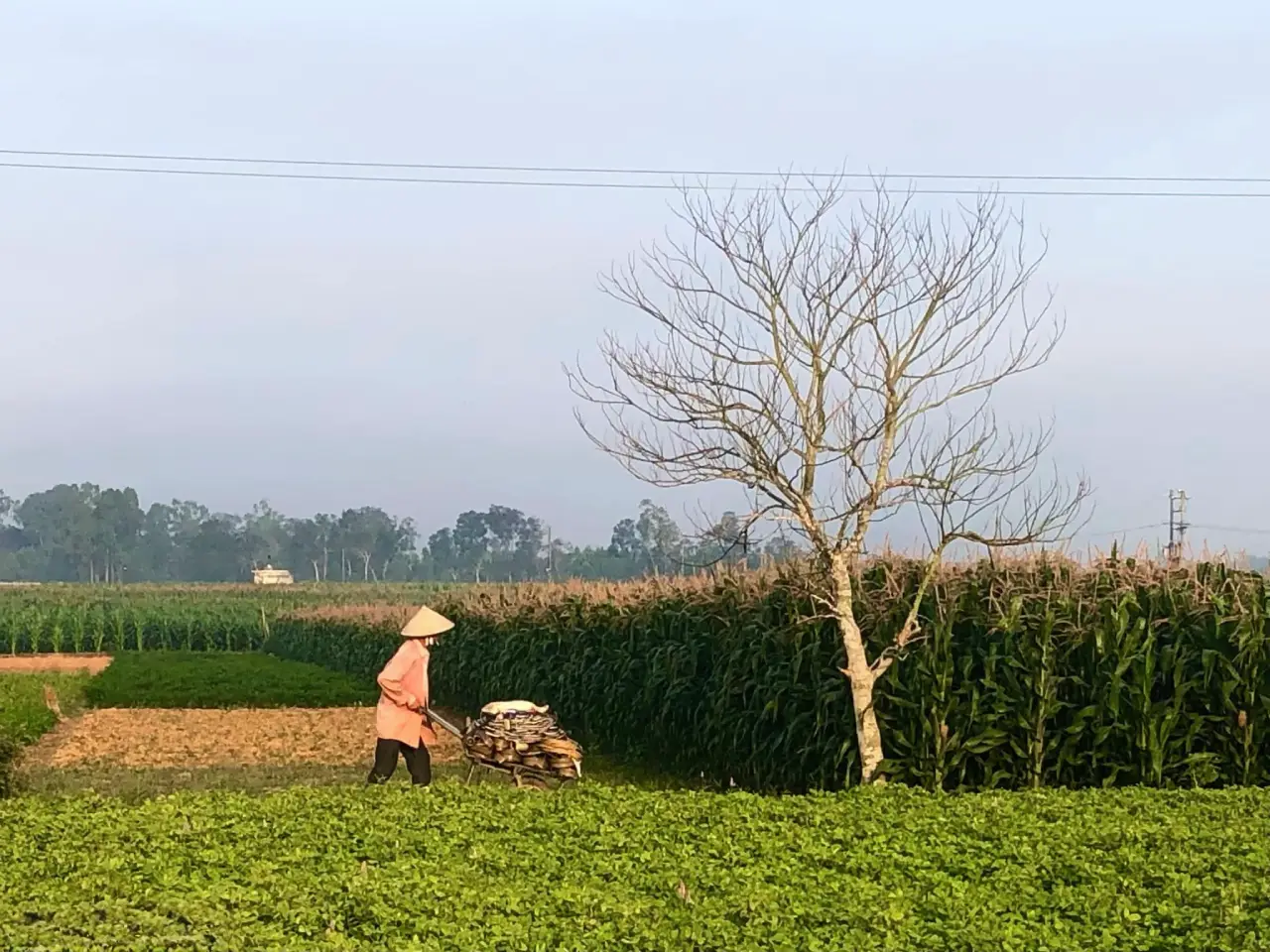
Photo courtesy of
Le Anh Ca
Cam Dong offers a view of Vietnamese village life that has not been heavily redesigned for tourists.
Practical Advice for Visiting These Places
These hidden gems have fewer services than the main attractions around Hoi An. That gives them a more peaceful atmosphere, but it also means travellers should prepare carefully.
For Dam Cam Ha and Dien Duong Hidden Beach, a bicycle or motorbike is usually suitable.
For Suoi Tien, Cam Dong, Tam Thanh Beach, Phuoc Ha Dam, Phu Ninh Lake and Loc Yen Ancient Village, a reliable motorbike or private car is more practical.
Before visiting the more remote places:
- Check the weather forecast
- Download an offline map
- Start with enough fuel
- Carry drinking water and some cash
- Avoid mountain streams during heavy rain
- Do not enter private fields, houses or gardens without permission
- Take all rubbish away with you
- Avoid loud music in villages and natural areas
- Return before dark if you do not know the roads well
Conditions can change with the season. A beach may become rough, a bamboo bridge may need repair, and a mountain path may become unsafe after rain.
Discovering a Quieter Side of Hoi An
Hoi An is more than its yellow houses, lanterns and busy tourist streets.
The wider area includes peaceful wetlands, quiet beaches, vegetable-growing villages, reservoirs, mountain streams and old wooden houses hidden among green hills.
These places may not offer organised entertainment or polished tourism services.
Their value comes from something simpler: open landscapes, local life and the chance to travel slowly.
Visit respectfully, support local families where possible and leave each place as you found it.
That is often the best way to experience the lesser-known countryside in and around Hoi An.
Frequently Asked Questions
What are some hidden gems near Hoi An?
Some lesser-known places around Hoi An include Dam Cam Ha,
Dien Duong Hidden Beach, Cam Dong Village, Suoi Tien in Que Son,
Phuoc Ha Dam and Loc Yen Ancient Village. Some of these are not
formal tourist attractions and are mostly known by local people
or travellers who enjoy exploring beyond the usual routes.
Are there non-touristy places near Hoi An?
Yes. The countryside around Hoi An has many quiet wetlands,
village roads, beaches and farming areas with very little tourism
development. Dam Cam Ha, Cam Dong Village and the countryside around
Phuoc Ha Dam are good examples.
What is a good hidden beach near Hoi An?
A quiet stretch of coastline in Dien Duong, between An Bang Beach
and Ha My Beach, remains much less developed than the better-known
beaches around Hoi An. We call this place Dien Duong Hidden Beach,
although this is our own name for the location rather than an
official beach name.
What is a good countryside day trip from Hoi An?
Travellers who enjoy rural scenery can explore south of Hoi An
towards Phuoc Ha Dam, Suoi Tien in Que Son and Loc Yen Ancient Village.
The journey itself is part of the experience, with quiet roads,
farmland, small villages, hills and everyday rural life along the way.
How far are these hidden gems from Hoi An?
Some are very close to Hoi An. Dam Cam Ha is around 4 km away,
while Dien Duong Hidden Beach is around 7 km away. More remote places
such as Suoi Tien and Loc Yen Ancient Village are approximately
40 to 75 km from Hoi An Ancient Town.
Do I need a motorbike to visit these places?
A bicycle is suitable for Dam Cam Ha and some countryside areas close
to Hoi An. For places such as Suoi Tien, Phuoc Ha Dam, Phu Ninh Lake
and Loc Yen Ancient Village, a motorbike or private car is much more
practical.
Are these places suitable for first-time visitors to Hoi An?
Yes, but they are better suited to travellers who enjoy exploring
independently. Some places have few tourism services, limited signs
and quiet local roads, so it is useful to check the weather,
download an offline map and plan your route before leaving Hoi An.
Discover Another Local Story in Hoi An
After exploring the quieter side of Hoi An, stop by
Hoa Arika Hoi An in the Ancient Town and discover
another local story – this time through drinks.
Every Hoa Arika drink is sweetened with fresh nipa, coconut or arenga
blossom nectar, bringing together ingredients and farming traditions
from Central Vietnam.
Three palms. Three nectars. One sweet story from Hoi An.
Hoa Arika Hoi An
2A Phan Chau Trinh, Hoi An
Open daily: 7:00 AM–9:00 PM