We’re working on this article and adding more local information, photos, and useful tips. This is not the final version yet, but we hope it helps you explore Hoi An’s food. Thank you for reading!
Banh mi is one of the first foods many visitors want to try in Hoi An. And yes, it is delicious. But if you only eat banh mi, you’ll miss many other good local dishes.
From bowls of noodles to small snacks and sweet desserts, Hoi An has plenty of food to explore. Some dishes are closely connected to Hoi An and Quang Nam, while others are popular across Vietnam and easy to find here.
Here are 15 foods worth trying during your visit. You don’t need to eat all of them in one day. Take your time and enjoy the local food scene.
Hoi An and Quang Nam Specialties
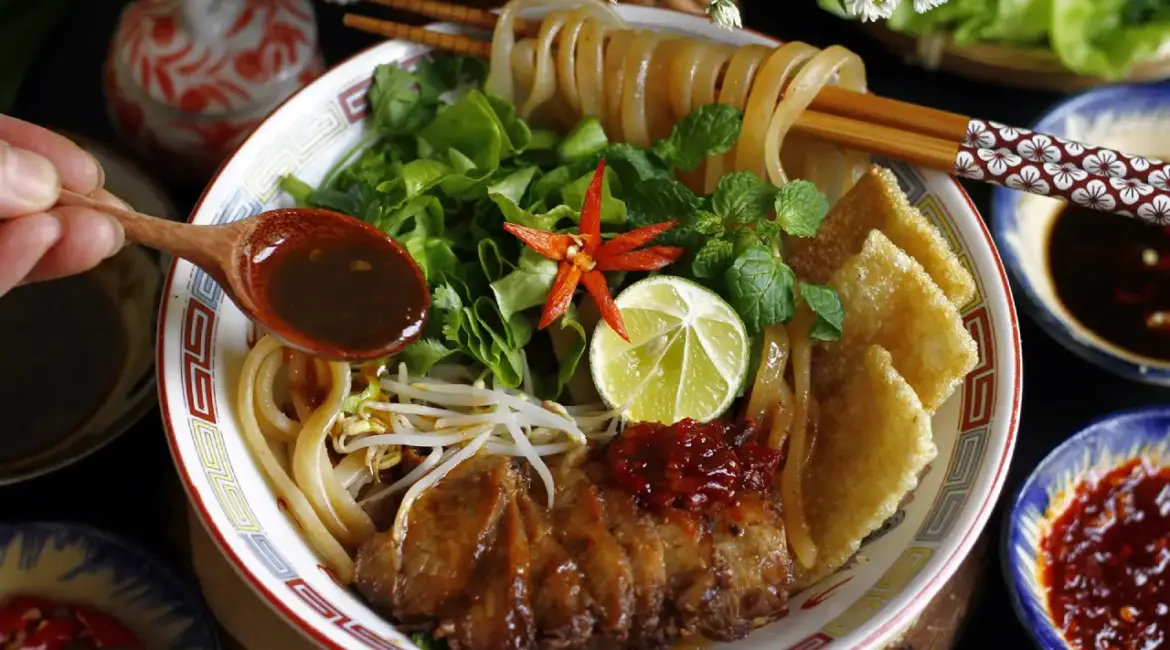
1. Cao Lau – Hoi An’s Famous Noodles
Cao lau is one of the dishes most closely connected with Hoi An. It usually comes with thick, chewy noodles, slices of pork, fresh greens and crunchy toppings. There is only a small amount of sauce or broth, so it is not a typical noodle soup.
If this is your first time in Hoi An, cao lau should be near the top of your food list.
2. Mi Quang – Quang-Style Noodles
Mi Quang is a well-known dish from the Quang Nam and Da Nang region. It has wide rice noodles, a small amount of flavorful broth, herbs and toppings such as chicken, pork, shrimp or eggs, depending on the shop.
It is often served with rice crackers. Mix the ingredients together before eating for the best combination of flavors.
3. Com Ga Hoi An – Hoi An Chicken Rice
Hoi An chicken rice usually includes fragrant rice, shredded chicken, herbs and a light dressing. Some places serve it with a small bowl of soup.
It looks simple, but the balance of rice, chicken and herbs makes it a favorite for many locals and visitors.
4. Banh Bao Banh Vac – White Rose Dumplings
These small steamed dumplings are often called White Rose because of their shape. They have thin rice-flour wrappers and savory fillings, usually served with fried shallots and dipping sauce.
This is one of the more recognizable Hoi An specialties. It is a good choice if you want something lighter than a full bowl of noodles.
5. Banh Dap and Hen Xao – Rice Crackers with Stir-Fried Clams
Banh dap combines crispy rice crackers with a softer rice layer. It is often eaten with a dipping sauce. A popular pairing in the Hoi An area is hen xao, small clams stir-fried with herbs and seasonings.
The mix of crunchy crackers and savory clams is worth trying, especially if you enjoy seafood.
6. Banh Beo – Small Steamed Rice Cakes
Banh beo are small steamed rice cakes served in little bowls or dishes. Toppings vary, but may include shrimp, crispy bits and savory sauce.
They are popular in central Vietnam, not only Hoi An. You can order several small portions and share them with friends.
7. Hoanh Thanh – Hoi An-Style Wontons
Wontons are another food you may see around Hoi An. Some shops serve them in soup, while others offer crispy fried wontons with a savory topping or sauce.
The fried version is a nice snack to share. Check the menu because recipes can be different from one place to another.
Everyday Vietnamese Foods Worth Trying in Hoi An
8. Bo Ne – Vietnamese Sizzling Beef
Bo ne is often served on a hot metal plate with beef, egg and other ingredients. It usually comes with bread for dipping into the sauce.
It is a filling breakfast or brunch option. Be careful when the plate arrives because it can be very hot.
9. Banh Cuon – Steamed Rice Rolls
Banh cuon are soft, thin steamed rice sheets, often rolled around a savory filling and served with herbs and dipping sauce.
This dish is enjoyed in many parts of Vietnam. If you want a lighter breakfast, it is a good option to look for.
10. Banh Can – Small Pan-Cooked Rice Cakes
Banh can are small rice-flour cakes cooked in round molds. Depending on the vendor, they may come with eggs, seafood or other toppings and are served with dipping sauce.
Banh can is more strongly associated with other parts of central and southern Vietnam than with Hoi An itself, but you may find it at local food stalls.
11. Banh Xeo – Crispy Vietnamese Pancakes
Banh xeo is a savory, crispy pancake made with rice-flour batter. Fillings often include shrimp, pork and bean sprouts. It is commonly eaten with greens and dipping sauce.
Ask the staff how to eat it if you’re trying it for the first time. Wrapping a piece with herbs is part of the fun.
12. Banh Mi Chay – Vegetarian Banh Mi
If you’ve already tried a meat-filled banh mi, why not try a vegetarian version? Fillings can include tofu, mushrooms, vegetables and vegetarian sauces.
Not every shop has the same ingredients, so ask before ordering if you avoid eggs, dairy or other animal products.
Traditional Sweets and Snacks
13. Xi Ma – Black Sesame Sweet Soup
Xi ma is a warm, thick black sesame dessert that has long been associated with Hoi An street food. It has a rich sesame flavor and is usually eaten with a spoon.
It may look unusual if you’ve never tried black sesame in a dessert, but it’s worth tasting.
14. Che – Vietnamese Sweet Desserts
Che is a general name for many Vietnamese sweet desserts. Depending on the shop, you may find beans, jelly, coconut milk, fruit or other ingredients served warm or with ice.
Che is popular throughout Vietnam, and the selection can change by season and vendor. It’s a nice way to finish a food walk.
15. Banh It La Gai – Sticky Rice Cake Wrapped in Leaves
Banh it la gai is a small, dark-colored sticky rice cake traditionally made with la gai leaves. It often has a sweet filling such as mung bean or coconut and is wrapped in banana leaves.
This traditional central Vietnamese snack is easy to carry and makes a good small treat.
A small note: Not all 15 foods were invented in Hoi An. We included both local specialties and other Vietnamese dishes that visitors may enjoy while staying here. Availability depends on the shop, season and time of day.
Where Should You Try These Foods?
You can find local food around Hoi An’s markets, neighborhood streets and small family-run shops. Some dishes are easier to find in the morning, while others are available later in the day.
We recommend checking the menu and price before ordering. If a shop is busy with local customers, it may be worth a look, but a queue alone doesn’t always tell you which food you’ll enjoy most.
We’re still adding verified shop recommendations and updated practical details to this guide.
A Few Simple Food Tips
- Start with small portions. This gives you room to try more than one dish.
- Ask about ingredients. Recipes can vary, especially if you have allergies or dietary restrictions.
- Carry some cash. Small vendors may not accept cards.
- Check opening times. Some local food stalls only sell in the morning or until their food runs out.
- Don’t rush. A simple breakfast or afternoon snack can be one of the nicest parts of your Hoi An visit.
And What About Banh Mi?
Of course, banh mi still deserves a place on your food list. Hoi An has well-known shops such as Banh Mi Phuong and Madam Khanh, along with smaller neighborhood vendors.
If you want to learn more, read our Hoi An Banh Mi Guide or our comparison of Banh Mi Phuong and Madam Khanh.
A Refreshing Drink Along the Way
If you’re exploring the Old Town or visiting Banh Mi Phuong, you can also stop by Hoa Arika Hoi An at 2A Phan Chau Trinh.
We’re a small takeaway drink shop using coconut, nipa and arenga palm blossom nectars to sweeten our drinks instead of refined sugar. It’s our way of sharing another local ingredient story with visitors.
Enjoy Hoi An One Dish at a Time
You don’t need an expensive restaurant or a long food tour to enjoy Hoi An’s local food. Sometimes a small bowl of noodles, a plate of rice or a snack from a neighborhood stall is enough to make a good memory.
Try the famous specialties, but leave some room for dishes you haven’t heard of before. You might find a new favorite.
Continue Exploring Hoi An
Explore Hoi An with Hoa Arika — A sweet story from Hoi An.